The test is written first
A test that has never failed has never been shown to test anything. Ours fail before the change and pass after it, and we can show you which.
Practice
Research, design, front end, services, data and platform in one team — so nothing is lost in a handover that never has to happen.
Most delivery failures are not engineering failures. They are handovers: a concept designed by one group, specified by a second, built by a third and operated by a fourth, each translating the last. We keep the whole path in one team, which is why the thing that ships is recognisably the thing that was designed.
Five phases, and the first one can end with us telling you not to build it.
Two to three weeks with your users and your data, ending in a designed concept, a technical approach and an honest estimate — including the case for not building it. We would rather lose the build than deliver one that should not have started.
Interaction design, content design and architecture in the same room and the same week. Design tokens and components are produced as code from the start, so there is no handover step in which the design quietly changes.
Real infrastructure, real pipeline, real data boundaries on day one. The first deploy happens in week one and every deploy after it is the same mechanism, so shipping never turns into a project of its own.
Threat modelling, dependency and secret hygiene, access review and accessibility conformance run as part of delivery. Remediation found in week two costs a day; the same finding at assessment costs a quarter.
Service objectives, alerting that maps to user harm rather than to CPU, and a deliberate transfer of capability to your team. The engagement is designed to end.
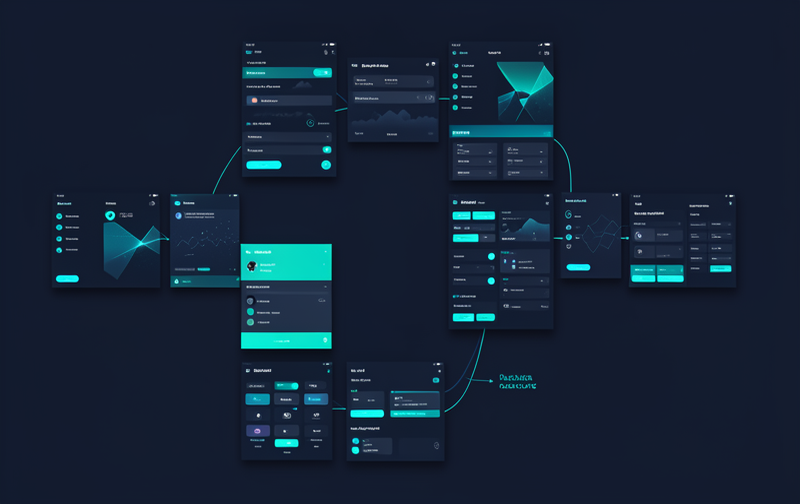
Find the real task before designing the screen that serves it.
We start from what a person is actually trying to finish, decompose it into the screens and controls that get them there, and treat every state that task can be in — empty, loading, partial, failed — as work to be designed rather than something the front end will improvise. That is also what makes a missing step detectable: a task model can be checked against a running product, and a screen nobody built shows up as a gap.
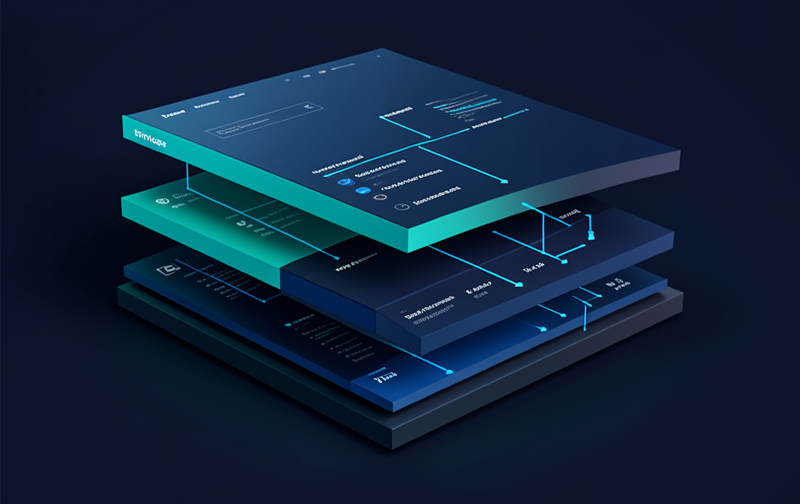
One team from the interaction to the query plan.
The seam between design and engineering is where products lose their shape, so we remove the seam. The same team builds the interface, the services behind it and the data model underneath — which means a design decision that would be expensive at the database is known on the day it is made, not in the sprint that has to absorb it.
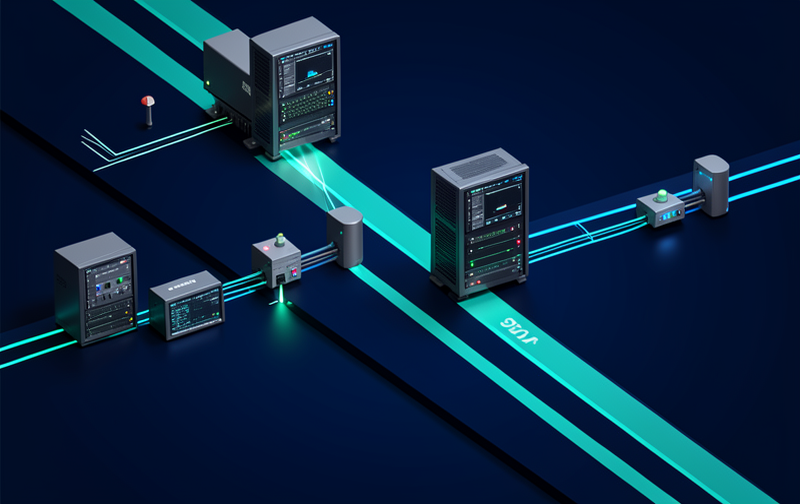
A deploy should be boring, reversible, and the same every time.
Infrastructure as code, one pipeline, and a rollback that is exercised rather than documented. We instrument for the failures that reach a user, because a green dashboard beside a broken product is the most expensive kind of monitoring — and a system that reports healthy while every request fails is a pattern we have had to design against directly.
Four standards we do not trade away under schedule pressure, because they are what makes the schedule hold.
A test that has never failed has never been shown to test anything. Ours fail before the change and pass after it, and we can show you which.
One branch, small changes, and a main line that could ship at the end of any day. Long-lived branches hide integration risk until it is expensive.
A passing test and a working feature are not the same claim. Every user-facing change is driven in a real browser before it is called done.
Every deploy has a rehearsed way back, including the database. A rollback first attempted during an incident is not a rollback, it is a hope.
Published in full. You will own this after we leave, so you are entitled to know what it is before you commission it.
We choose boring, well-supported technology by default and justify every exception. Novelty is a cost your team pays after we have gone.
Start with a discovery sprint. Worst case, you save the cost of the build.